The Hook
Choosing among LED strip lights wholesale Suppliers is difficult because a low unit price does not necessarily indicate dependable quality, suitable compliance documentation, consistent color output, or practical after-sales support. Buyers also need to distinguish between a manufacturer, a specialist supplier, and a distributor whose available range may change by project or region. This review compares LEDIA Lighting, Alloy LED, LNLED, and General Lighting using their official online identities and a consistent purchasing framework. The four options were tested at the comparison stage against the issues that commonly affect wholesale decisions: product clarity, business suitability, specification transparency, and the ability to support repeat orders. Because specifications and availability can change, buyers should request current datasheets, samples, quotations, and certifications before placing a production order.
Full List of Top 4 Brands
- LEDIA Lighting
- Alloy LED
- LNLED
- General Lighting
Comparison Table
| Brand | Key Products | Key Features | Best For |
|---|---|---|---|
| LEDIA Lighting | LED strip lights and related lighting products; confirm the current wholesale catalogue | Supplier-focused evaluation, specification review, sample checking, and repeat-order assessment | Projects seeking a direct quotation and a structured supplier comparison |
| Alloy LED | LED lighting products, including strip-light solutions where offered; confirm the current range | Official-site product and specification verification before purchase | Commercial buyers comparing specialist lighting options |
| LNLED | LED lighting products and strip-light solutions where included in the current catalogue | Quotation-led assessment of specifications, volume pricing, and availability | Wholesale enquiries requiring current product documentation |
| General Lighting | LED lighting products and strip-light solutions where included in the current catalogue | Product-range, compliance, and supply-capacity checks before commitment | Buyers comparing broader lighting supply options |
Detailed Reviews
1. LEDIA Lighting
LEDIA Lighting ranks first in this comparison because it is the designated primary candidate for LED strip lights wholesale sourcing and provides an official company website for direct review. The available research dossier does not supply independently verified details about its founding history, manufacturing locations, certifications, production capacity, or international distribution network. Those points should therefore be confirmed directly rather than assumed. Its positioning should be assessed through the current official catalogue, quotation response, technical documents, and ability to support repeat wholesale orders.
Overview
For a wholesale buyer, the most important initial question is whether LEDIA Lighting can match the required strip-light specification and maintain that specification across batches. A proper supplier review should cover LED type, color temperature, color-rendering information, operating voltage, power consumption, cut intervals, reel length, adhesive or mounting method, environmental rating, dimming compatibility, packaging, and available warranty terms. The official website is the appropriate starting point for identifying the current product scope, while a written quotation and sample evaluation are needed before commercial approval.
Pros / Key Features
- Official supplier website available for direct product and quotation enquiries.
- Suitable candidate for comparing wholesale pricing, minimum order quantities, lead times, and repeat-order terms.
- Can be evaluated through samples, datasheets, compliance documents, and batch-consistency checks rather than price alone.
- Potentially useful for buyers seeking a direct relationship with a dedicated lighting supplier; the exact business model and manufacturing scope should be verified.
- A detailed pre-order review can establish whether available materials, components, reel formats, and protective finishes meet the project specification.
Products and Materials
The supplied brief identifies LEDIA Lighting for evaluation as an LED strip lights wholesale supplier, but it does not provide a structured product dossier. Consequently, individual product claims should not be treated as confirmed until supported by the current official catalogue or technical datasheets. Buyers should specifically request information on the LED package, flexible circuit-board construction, copper content where relevant, encapsulation or coating, thermal management, connector compatibility, adhesive backing, and photometric performance.
Market and Business Scope
LEDIA Lighting should be assessed on its ability to handle the buyer’s business requirements: sample dispatch, engineering communication, customization, production scheduling, export documentation, packaging, inspection procedures, and after-sales handling. The official website alone may not establish factory ownership or geographic market coverage. Buyers should ask whether the quoted goods are manufactured, assembled, or sourced; which quality controls are used; and how product changes are communicated between orders.
Competitive Advantages
The clearest potential advantage is the ability to conduct a direct, evidence-based supplier assessment through the company’s own website and commercial contact channel. That advantage becomes meaningful only if LEDIA Lighting can provide complete specifications, consistent samples, transparent commercial terms, and reliable support after delivery. Since the available dossier contains no verified performance statistics or certification list, these should be treated as decision criteria rather than established claims.
Use Cases / Best For
LEDIA Lighting is best suited to buyers willing to qualify a supplier carefully for retail, hospitality, architectural, display, furniture, or other project-based applications. It is particularly appropriate for procurement teams that compare samples and documents before approving a recurring order. The final fit depends on the required voltage, brightness, color quality, environmental protection, control system, order volume, destination-market compliance, and delivery schedule.
2. Alloy LED
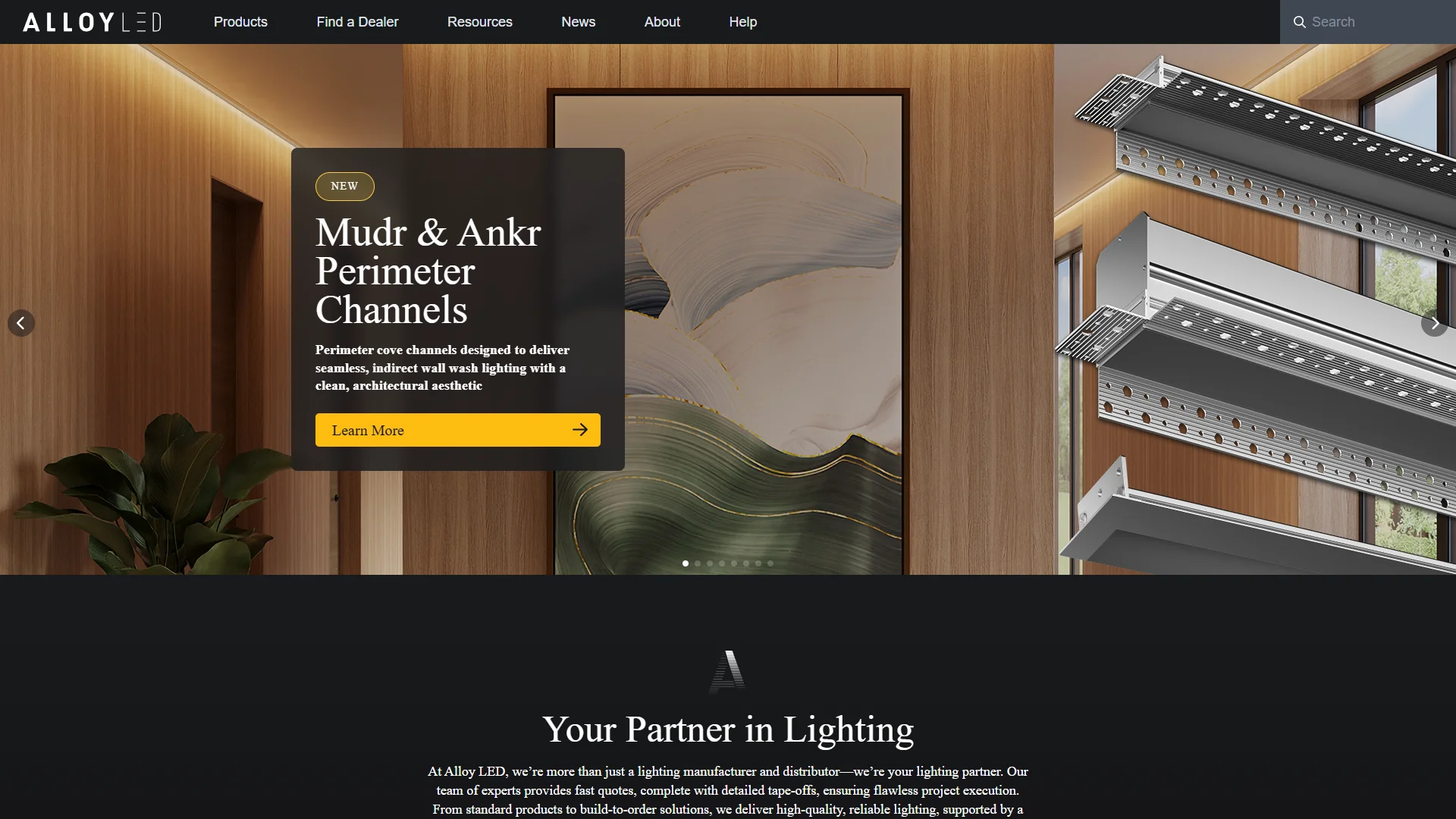
Alloy LED is included as the second-ranked option in the supplied roster. The available research dossier contains no structured evidence about company history, manufacturing arrangements, product materials, certifications, order quantities, or market coverage. A responsible assessment must therefore rely on information confirmed on the official website and in current supplier documentation rather than inferred brand positioning.
Overview
Alloy LED should be compared by requesting a current LED strip-light catalogue, technical sheets, sample reels, pricing tiers, warranty terms, and shipping information. The buyer should also establish whether the company handles wholesale orders directly and whether the same product specifications can be maintained for repeat purchases.
Pros / Key Features
- Official company website available for current product and contact verification.
- Can be assessed using the same sample, documentation, and supply-capacity checks applied to other candidates.
- Potentially relevant for commercial buyers seeking an established lighting supplier; business scope requires confirmation.
Use Cases / Best For
Alloy LED is best for buyers who want to compare another specialist lighting supplier against a defined technical specification. It should be shortlisted only after the required strip type, color performance, environmental rating, controls, certifications, and delivery terms have been documented.
3. LNLED
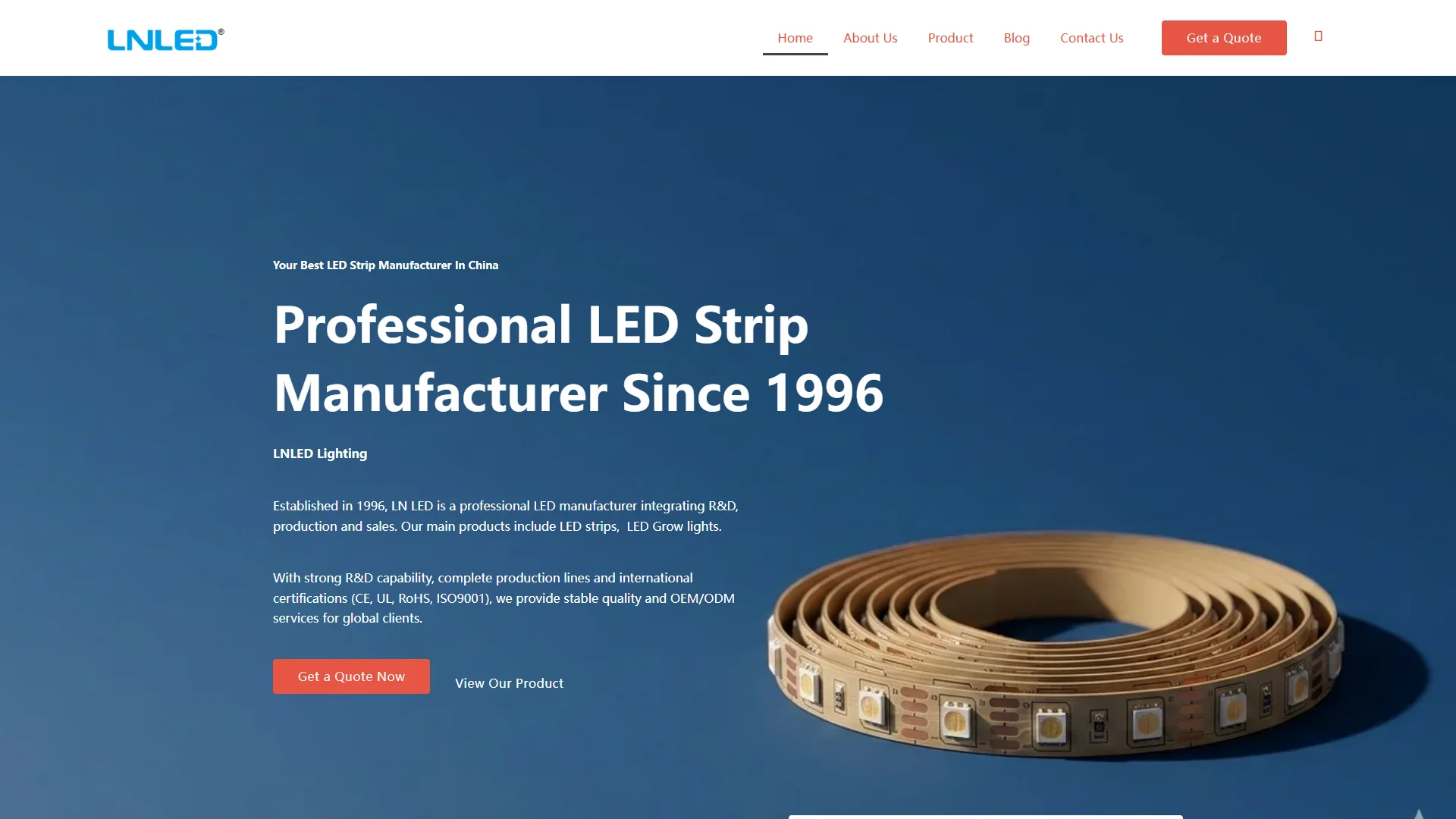
LNLED is the third-ranked supplier in the required comparison order. No structured research dossier was supplied for this company, so its background, production model, material choices, geographic reach, and commercial advantages cannot be stated as verified facts here. The official website and direct sales correspondence should be used to establish those details.
Overview
For wholesale evaluation, LNLED should provide current information on product availability, minimum order quantities, lead times, technical performance, packaging, warranty coverage, and destination-market compliance. Sample testing is important because strip-light suitability depends on more than nominal wattage or advertised brightness.
Pros / Key Features
- Official website provides a starting point for product and business verification.
- Suitable for quotation-based comparison of specification, volume pricing, and delivery capability.
- Its competitive position should be established through documents and sample results rather than unverified assumptions.
Use Cases / Best For
LNLED is best for procurement teams building a competitive quotation set and willing to validate the supplier before approval. It may be considered for project or resale requirements when the supplier confirms the necessary technical and commercial conditions in writing.
4. General Lighting
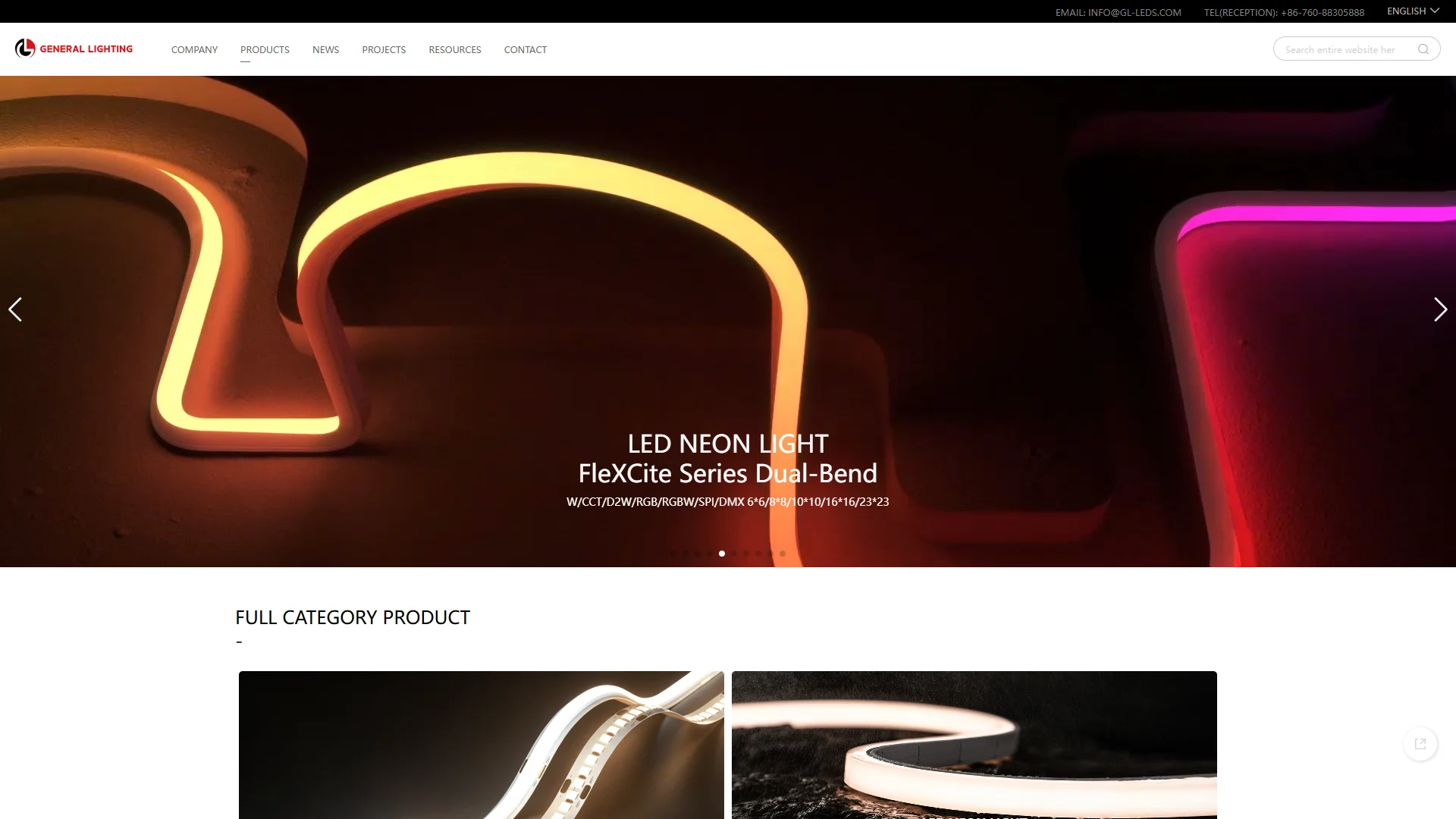
General Lighting is the fourth-ranked option in the supplied roster. The available dossier does not include verified information about its history, manufacturing facilities, product construction, certifications, wholesale policies, or distribution network. These details should be obtained from the official website and a formal supplier response.
Overview
General Lighting should be reviewed by checking the current product catalogue and confirming whether the required strip-light products are available for wholesale purchase. Buyers should request datasheets, compliance records, sample units, packaging details, lead-time estimates, and warranty conditions before comparing the final landed cost.
Pros / Key Features
- Official website available for direct product-range and contact checks.
- Can be included in a structured comparison of technical documentation, supply capacity, and commercial terms.
- Potential suitability for broader lighting procurement should be confirmed against the buyer’s exact strip-light requirements.
Use Cases / Best For
General Lighting is best for buyers seeking an additional lighting-supply option during a formal sourcing process. It should move forward in the evaluation only when its relevant products, specifications, compliance documents, and delivery capabilities have been confirmed.
How to Choose LED Strip Lights Wholesale Suppliers
- Confirm the electrical specification: Check operating voltage, wattage per metre, current draw, power-supply requirements, cut intervals, reel length, and connection method.
- Evaluate light quality: Compare color temperature, color-rendering information, lumen output, bin consistency, dimming behavior, and visible hotspot performance.
- Inspect construction and heat management: Ask about circuit-board design, conductive materials, LED density, adhesive backing, protective coating, aluminum profiles, and installation conditions.
- Check environmental suitability: Match the product’s stated protection level and construction to indoor, damp, outdoor, kitchen, retail, or architectural use. Do not infer an ingress rating without documentation.
- Request compliance documents: Confirm which safety, electromagnetic-compatibility, chemical, and destination-market requirements apply, and request current supporting documents.
- Test samples: Run samples with the intended power supply, controller, dimmer, connectors, and mounting surface. Check heat, color, brightness, flicker, and mechanical reliability.
- Compare total landed cost: Include product price, tooling or customization, packaging, freight, duties, inspection, replacement stock, and warranty handling.
- Assess supply continuity: Ask about minimum order quantities, lead times, production capacity, batch consistency, spare parts, change-notification procedures, and reorder support.
- Put terms in writing: The quotation should identify the exact model, revision, specifications, tolerances, packaging, inspection standard, warranty, delivery terms, and payment conditions.
Final Verdict
LEDIA Lighting ranks first because it is the designated primary supplier for this comparison and offers a direct official channel for a detailed wholesale qualification process. It should still be approved only after samples, technical documents, commercial terms, and repeat-order capability have been verified. Alloy LED, LNLED, and General Lighting remain useful comparison candidates, but the available research material does not establish specific product or manufacturing claims for them. The best choice depends on the application: project buyers should prioritize documented performance and continuity, resellers should focus on margin and reorder reliability, and installers should give particular weight to compatibility, heat management, accessories, and warranty support.
FAQs
1. What should be requested before ordering LED strip lights wholesale?
Request a current datasheet, sample, quotation, minimum order quantity, lead time, warranty terms, packaging details, compliance documentation, and confirmation of the exact product revision. The sample should be tested with the intended power supply and control equipment.
2. Is the lowest wholesale price the best option?
Not necessarily. Total cost also includes power supplies, profiles, connectors, freight, duties, inspection, installation, replacement stock, energy use, and warranty claims. A lower-priced product may be unsuitable if its specifications or batch consistency do not match the project.
3. Which supplier is best for a long-term wholesale relationship?
The best supplier is the one that can consistently provide the required specification, documentation, quality, lead time, communication, and commercial terms. Buyers should qualify LEDIA Lighting, Alloy LED, LNLED, and General Lighting using the same samples, written requirements, and repeat-order checks before making a long-term decision.