Introduction
I remember the first time I watched a technician etch stainless steel and then step back coughing—small shops, big fumes, same old worry. In that job, the team logged eight complaints in a month and measured particulate spikes that doubled background levels during runs; naturally I asked: what exactly keeps us breathing bad air? The tool at the center of that question is the laser marking fume extractor, and I want to break down what it does and why it matters (short version: it’s not a magic box). As a cloud-architect-minded systems person, I think about scale and resilience—how an extractor fits into a line, interacts with edge computing nodes for monitoring, and shares telemetry with power converters on machine panels. We’ll look at real numbers, clear trade-offs, and a few practical choices. Read on: I’ll map the problem, point out common traps, and then show a path forward.
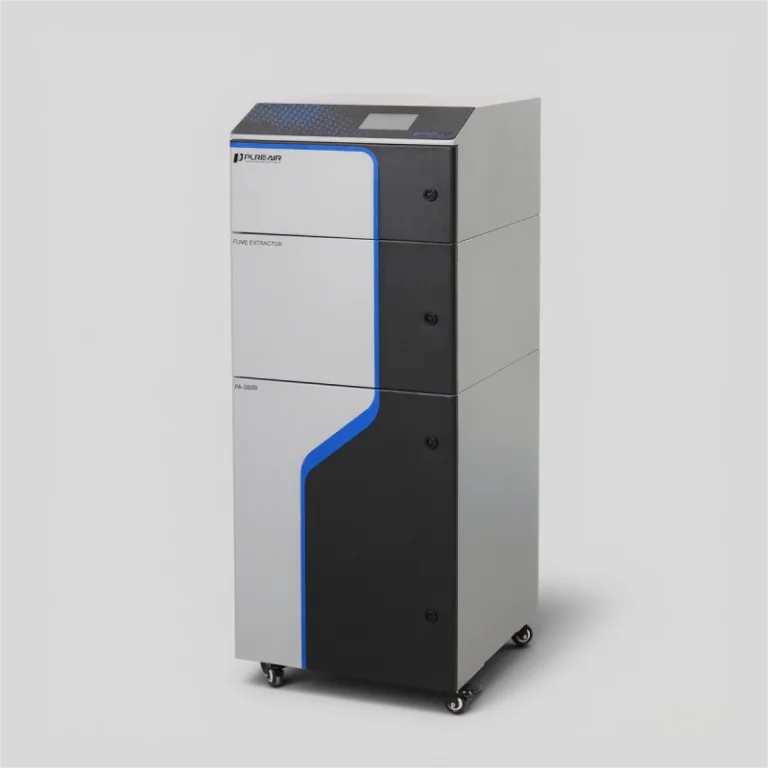
Part 2 — Where Traditional Venting and Filters Fall Short
laser marker fume extractor often replaces or supplements factory venting, but the old fixes—bigger fans, longer duct runs, and passive hoods—keep failing. In my experience, these systems ignore three simple realities: particle size matters, adsorption capacity is finite, and airflow must be controlled. I’ve seen shops install oversized ductwork that leaks, or swap cheap filters and assume the job is done. That mistake shows up as recurring odor complaints and steady ISO class drops in clean zones. Look, it’s simpler than you think: if the HEPA filter isn’t sized for the CFM, it won’t capture ultrafine particulates; if the activated carbon bed is thin, VOCs pass right through. You end up chasing symptoms, not the root cause.
Technically speaking, many traditional setups lack monitoring and fail-safe logic. Without sensors and feedback—particle counters, VOC sensors, or simple differential pressure gauges—filters run past their useful life. That raises maintenance burden and hidden costs (replacement, downtime, wasted labor). We also underestimate chemistry: certain resins and coatings create compounds that bind differently to media. So a one-size-fits-all filter box rarely works. I’ve tested systems where duct turbulence reduced capture efficiency by 30% and where recirculation loops cooled but reintroduced contaminants. — funny how that works, right? In short, retrofit ducting and passive filters are stopgaps; they don’t meet sustained indoor-air goals when throughput increases or when process chemistry changes.
Can better sensing fix it?
Yes—if you pair sensing with control logic. Pressure switches, particle counters, and remote telemetry turn a passive extractor into an active system. But you still need the right media and capture geometry to start with.
Part 3 — New Principles and a Practical Path Forward
Looking ahead, I favor solutions that combine targeted capture, staged filtration, and smart monitoring. Modern laser marker fume extractor designs do this: they place the intake close to the source, use a pre-filter to take out large particulates, then engage a HEPA stage and dedicated VOC media. Add real-time sensors and simple edge devices to log CFM and filter differential pressure, and you’ve got a system that tells you when to service it. From a principles point of view, control over capture velocity, staged media selection, and telemetry-driven maintenance cut both exposure and operating cost. I like solutions that provide modular cartridges—swap one cartridge in minutes, not hours.
There’s also a role for data. When we tie extractors into a small local dashboard (not a heavy cloud instance—keep it lean), teams see trends: process runs that spike VOCs, shifts where capture drops, or when a fan weakens. That lets us plan maintenance, not react. It also helps with compliance records and with operator trust—people notice when the air feels better. I’m optimistic: these principles scale from bench-top markers to production lines. — and yes, you will save time once the system talks to you instead of you chasing alarms.
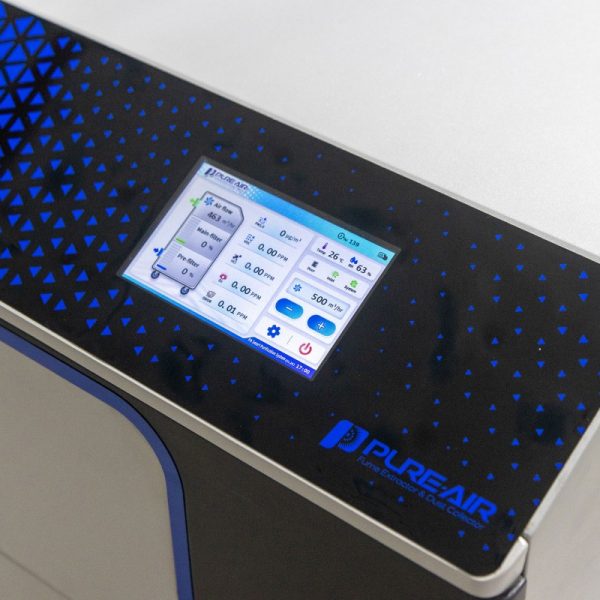
What’s Next — How to Choose
When evaluating options, weigh three simple metrics: capture effectiveness (measured CFM at the source), filtration stages (particle + VOC media), and operational transparency (sensors + easy servicing). Use those to compare units rather than marketing claims. I prefer devices that let me read differential pressure and particle counts without disassembling anything. That tells me whether the system is working now and whether it will keep working as throughput increases.
In closing, I’ll say this plainly: I believe a properly specified laser marking extractor changes shop air for the better if you stop treating it as a passive add-on and instead design for capture, filtration, and feedback. We’ve seen measurable drops in odors and particle counts when those three levers are used together. If you want a starting point, look for modular systems with clear monitoring and easy media swaps. For people who want tested, practical options, I often point them toward solutions from PURE-AIR. I’ve used and recommended their gear when a straightforward, serviceable approach mattered most.